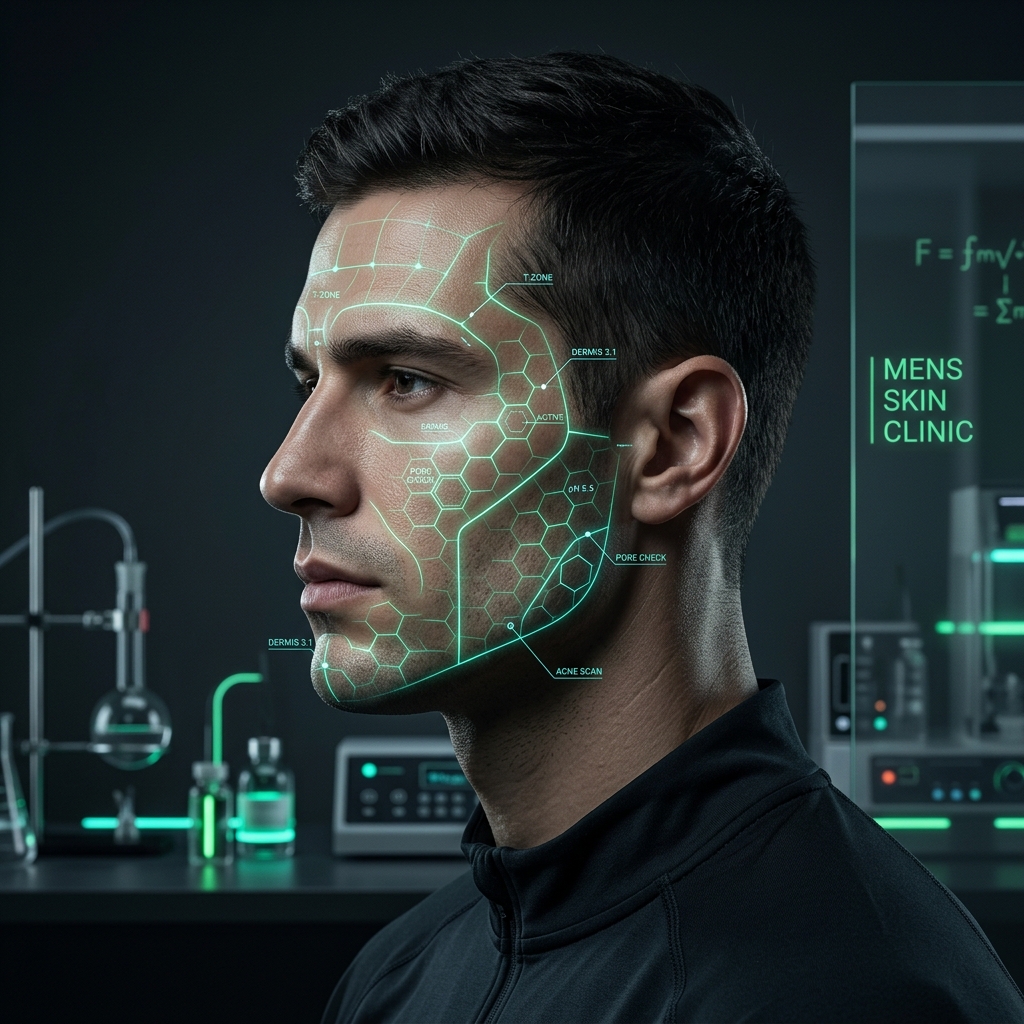
If you've spent the last six months scrubbing or "sandblasting" your face with generic drugstore cleansers, trying every benzoyl peroxide cream on the shelf, and wondering why your skin still looks like a topographic map of a disaster zone—there’s a reason.
You’re treating the wrong problem.
Most male skincare advice is generic garbage. It assumes that every breakout is caused by "not washing your face enough" or "bad hygiene." But for most men, the bottleneck isn't cleanliness; it's calibration. Your skin is a high-performance organ, and you’re treating it like a '98 Civic with a broken head gasket.
If you want to know how to get rid of acne for men, you have to stop thinking of "acne" as a single condition. It isn't. There are four distinct types of male acne, and if you use a Type 1 treatment on a Type 3 breakout, you won’t just fail—you’ll actively make it worse.
In this manual, we’re going to strip away the marketing fluff. No "glowy skin" talk. No "pampering." Just the technical specs, the biological causes, and the exact protocols to fix your face.
Why Most Acne Advice for Men Fails: The "One-Size-Fits-All" Scam
The skincare industry loves universal solutions because they’re easy to sell. They tell you that a bar of soap and a bottle of high-intensity acne treatment will solve everything.
In reality, male skin is biologically different from female skin. It’s about 25% thicker, it has a higher collagen density, and most importantly, it has significantly more (and larger) sebaceous glands. These glands are essentially oil factories driven by testosterone.
When you use the same generic products marketed to everyone, you fall into several traps:
- The Overdose Trap: Using harsh ingredients that strip your skin barrier, leading to reactive oil production.
- The Wrong Pathogen Trap: Treating a fungal overgrowth with antibacterial creams (which feed the fungus).
- The Control Logic Trap: Trying to fix a internal hormonal spike with external scrubbing.
Diagnosis is the bottleneck. Once you identify which of the 4 types you’re dealing with, the fix is usually a matter of logic, not luck.
What Are the 4 Types of Male Acne?
Type 1: Bacterial Acne (The Clogged Hardware)
This is the "standard" acne most guys think of. It’s caused by a perfect storm of excess sebum (oil) and the overgrowth of Cutibacterium acnes (formerly P. acnes)[1].
The Mechanism:
Think of your pores as exhaust pipes. When you produce too much oil, and your dead skin cells don't shed properly (a process called hyperkeratosis), the pipe gets blocked. Bacteria moves into the blockage, feeds on the oil, and creates an inflammatory response.
What it looks like:
- Whiteheads: Clogged pores that stay under the skin.
- Blackheads: Pores that open to the surface and oxidize (it's not dirt, it's chemistry).
- Pustules: The classic red bump with a white center.
- Location: Usually the T-Zone (forehead, nose, chin).
The Protocol:
- Benzoyl Peroxide (BP): This is the gold standard for bacterial acne. It introduces oxygen into the pore, which kills the anaerobic bacteria. Pro-tip: 2.5% is just as effective as 10% but won't bleach your beard or melt your skin.
- Salicylic Acid: A BHA (Beta Hydroxy Acid) that is oil-soluble. It goes into the pore and dissolves the "clog" like a liquid plumber[4].
- Niacinamide: Helps regulate sebum production so you aren't over-fueling the fire.
Type 2: Hormonal Acne (The Control Logic Issue)
This is the most frustrating type because it often hits men in their late 20s or 30s. It isn’t about how clean your face is—it’s about your androgen levels. Acne causes in men are frequently tied to testosterone and its byproduct, DHT.
The Mechanism:
Androgens tell your sebaceous glands to go into overdrive. This creates a specific type of thick, "heavy" sebum that is prone to deep, cystic inflammation. Stress also plays a role here—cortisol spikes trigger androgen spikes. It’s a feedback loop of destruction.
What it looks like:
- Deep Cysts: Painful, hard bumps that never come to a head.
- Jawline/Neck Concentration: If your breakouts are primarily along the jawline or under the chin, it's almost certainly hormonal.
- Cyclical Spikes: It gets worse when you’re stressed, sleep-deprived, or hitting the gym (leg day = T-spike).
The Protocol:
- Retinol for Acne: You need a retinoid (like Tretinoin or OTC Retinol/Adapalene). Retinoids communicate with your cells to normalize turnover. It’s like updating the firmware on your skin.
- Azelaic Acid: Excellent for killing the bacteria while simultaneously reducing the red marks (PIE) left behind by deep cysts.
- Lifestyle Calibration: If you're on a high-glycemic diet (sugar, white bread), your insulin spikes will drive your androgens higher. Fix your diet to fix your jawline.
Type 3: Fungal Acne (The Foreign Intel Issue)
Technically called Malassezia Folliculitis, fungal acne is the most misdiagnosed skin condition in men. It isn't actually acne; it's an inflammation of the hair follicle caused by yeast[2].
The Mechanism:
Everybody has Malassezia yeast on their skin. But if your humidity is high, your sweat is frequent, or you’ve over-used antibiotics, the yeast can overgrow. The kicker? Yeast feeds on oil—specifically the fatty acids found in almost every "hydrating" moisturizer and "natural" oil (like coconut or olive oil).
What it looks like:
- Uniformity: Dozens of tiny, red bumps that all look exactly the same size.
- The Itch: If your "acne" itches, it’s 90% likely to be fungal.
- Resistance: If you've been using benzoyl peroxide for months and it’s doing nothing, it’s probably fungal.
The Protocol:
- Antifungals: Use a dandruff shampoo containing Ketoconazole or Selenium Sulfide as a face wash. Leave it on for 3-5 minutes before rinsing. It will kill the overgrowth in weeks[3].
- Fungal-Safe Routine: You must switch to "fungal-safe" products. Any product with oils or esters will just feed the infection. Check your ingredients like you check your bank statement.
- Avoid Humidity: If you hit the sauna or live in a humid climate, you need to be twice as vigilant with your cleansing.
Type 4: Inflammatory/Barrier Damage (The System Breakdown)
This is "The Perfectionist’s Acne." It’s caused by doing too much. In your quest to clear acne fast, you’ve nuked your skin barrier.
The Mechanism:
Your skin has a "brick and mortar" structure. The bricks are skin cells, and the mortar is made of lipids (ceramides, cholesterol, fatty acids). When you use 12 different products, scrub too hard, or use high-concentration acids, you dissolve the mortar. Your skin becomes "leaky." Irritants get in, water gets out, and your skin breaks out in a desperate attempt to protect itself.
What it looks like:
- Reactive Redness: Your skin looks angry, shiny, and tight.
- Paradoxical Skin: Your face feels dry and flaky, but it's simultaneously oily. This is your skin overproducing oil to compensate for the lack of water.
- Sting and Burn: Even gentle moisturizers might sting when you apply them.
The Protocol:
- The Cold Turkey Reset: Stop all actives. No retinol, no acids, no BP.
- Barrier Repair: Use a moisturizer rich in Ceramides and Niacinamide. You need to rebuild the mortar before you can worry about the bricks.
- Gentle Cleansing: Switch to a non-foaming, pH-balanced cleanser. If your skin feels "squeaky clean," you've already lost.
How to Diagnose Your Type in 120 Seconds
You don't need a PhD. You just need to look at the evidence. Run through this logic gate:
- Is it itchy? Yes -> Start with Type 3 (Fungal) protocol.
- Is it deep, painful, and along the jawline? Yes -> Start with Type 2 (Hormonal) protocol.
- Is it red, shiny, and stinging? Yes -> Start with Type 4 (Barrier Repair) protocol.
- Is it just classic whiteheads/blackheads in the T-zone? Yes -> Start with Type 1 (Bacterial) protocol.
The Foundation: The 3 Non-Negotiables for Every Man
Regardless of your type, you need a baseline. If you don't have these three things right, no "advanced" acne treatment will save you.
1. The pH-Balanced Cleanser
Your skin is naturally acidic (around pH 4.5-5.5). Most bar soaps are alkaline (pH 8-10). When you wash your face with bar soap, you’re basically dumping bleach into a delicate ecosystem. Use a cleanser that respects your chemistry.
2. The Ceramide Moisturizer
Hydrated skin is resilient skin. Even if you have oily skin, you need to moisturize. Dehydrated oily skin is the most common cause of "unsolvable" breakouts in men. Look for ingredients like Hyaluronic Acid for water and Ceramides for the barrier.
3. SPF 30+ Daily
UV radiation is a massive inflammatory trigger. It also darkens post-acne marks (hyperpigmentation), turning a 1-week breakout into a 3-month scar. If you aren't using SPF, you aren't doing skincare—you're just wasting money on the other products.
Realistic Timelines: How to Clear Acne Fast (The Honest Version)
We live in an "instant gratification" culture, but biology doesn't care about your timeline. Your skin cells take roughly 28 to 40 days to cycle from the bottom layer to the surface.
If you want to clear acne fast, here is the reality of "fast":
- Fungal Acne: 1-2 weeks. (Fastest because it's an overgrowth, not a cellular issue).
- Bacterial Acne: 4-6 weeks. (Needs one full skin cycle).
- Inflammatory/Barrier: 2-4 weeks to heal the barrier, then another 4 weeks to resolve the breakouts.
- Hormonal Acne: 8-12 weeks. (Retinoids take time to "re-program" the follicle).
If you switch routines every two weeks because "it isn't working," you are the reason you still have acne. Consistency is the most important ingredient.
The 10 Skincare Sins: What’s Keeping Your Acne Alive
- The Dirty Pillowcase: You spend 8 hours a day grinding your face into a fabric that collects oil, sweat, and dead skin. Change it twice a week. At least.
- Gym Towel Negligence: Using the same towel for your face that you used to wipe down the bench press. You’re literally inviting staph and bacteria onto your skin.
- Touching Your Face: Your hands are biohazards. Every time you lean your chin on your hand, you're transferring bacteria.
- Scrubbing "For Cleanness": Physical scrubs (the ones with the beads) create micro-tears in your skin. These tears become gateways for bacteria.
- Ignoring Your Phone: Your phone screen has more bacteria than a public toilet. Wipe it down with an alcohol swab daily.
- Hot Showers: Scalding water melts your skin barrier. Lukewarm is the only way for your face.
- The "More is Better" Mentality: Using a pea-sized amount of retinol for acne is science. Using a handful is self-sabotage.
- Dirty Beard Grooming: If you have a beard, you have a forest of bacteria. If you don't wash and hydrate the skin under the beard, you'll get deep cystic breakouts.
- Skipping Post-Workout Washes: Letting sweat and salt dry on your face is like creating a brine for bacteria to grow in. Wash within 10 minutes of finished training.
- The Unhealthy Gut: While not a "skincare" sin, a diet high in processed sugar and low in fiber creates systemic inflammation that shows up on your face first.
Expert FAQ: Frequently Asked Questions
Can men get hormonal acne?
Absolutely. While often discussed in women, hormonal acne in men is driven by the very hormone that makes us men: testosterone. Spikes in DHT and Cortisol are the primary drivers of adult male acne.
Does diet affect acne?
For some men, yes. High-glycemic foods (sugar, white bread) spike insulin, which in turn spikes androgens. Dairy is also a common trigger for some, as it contains growth hormones meant for calves, not humans. If you're struggling, try cutting sugar for 14 days and observe the change.
Should I use Benzoyl Peroxide or Salicylic Acid?
If you have oily skin and blackheads, Salicylic Acid is better. If you have "angry" red pustules, benzoyl peroxide is better. If you have both, rotate them—don't use them at the exact same time.
How do I get rid of the red marks after the acne is gone?
Use Niacinamide and Vitamin C. These ingredients inhibit the production of melanin and help the skin heal faster. And again—use SPF. The sun makes red marks permanent.
References
- [1] Dréno B, et al. Cutibacterium acnes (Propionibacterium acnes) and acne vulgaris: a brief look at the latest updates. Journal of the European Academy of Dermatology and Venereology, 2018. PMID: 29894579
- [2] Rubenstein RM, Malerich SA. Malassezia (Pityrosporum) folliculitis. Journal of Clinical and Aesthetic Dermatology, 2014. PMID: 24688625
- [3] Vlachos C, et al. Critical synthesis of available data in Malassezia folliculitis and a systematic review of treatments. Journal of the European Academy of Dermatology and Venereology, 2020. PMID: 32012377
- [4] Liu H, et al. Topical azelaic acid, salicylic acid, nicotinamide, sulphur, zinc and fruit acid (alpha-hydroxy acid) for acne. Cochrane Database of Systematic Reviews, 2020. PMID: 32356369
Go to roastmyskin.com to get your technical dossier and stop guessing with your face.
— Skin Roast | roastmyskin.com