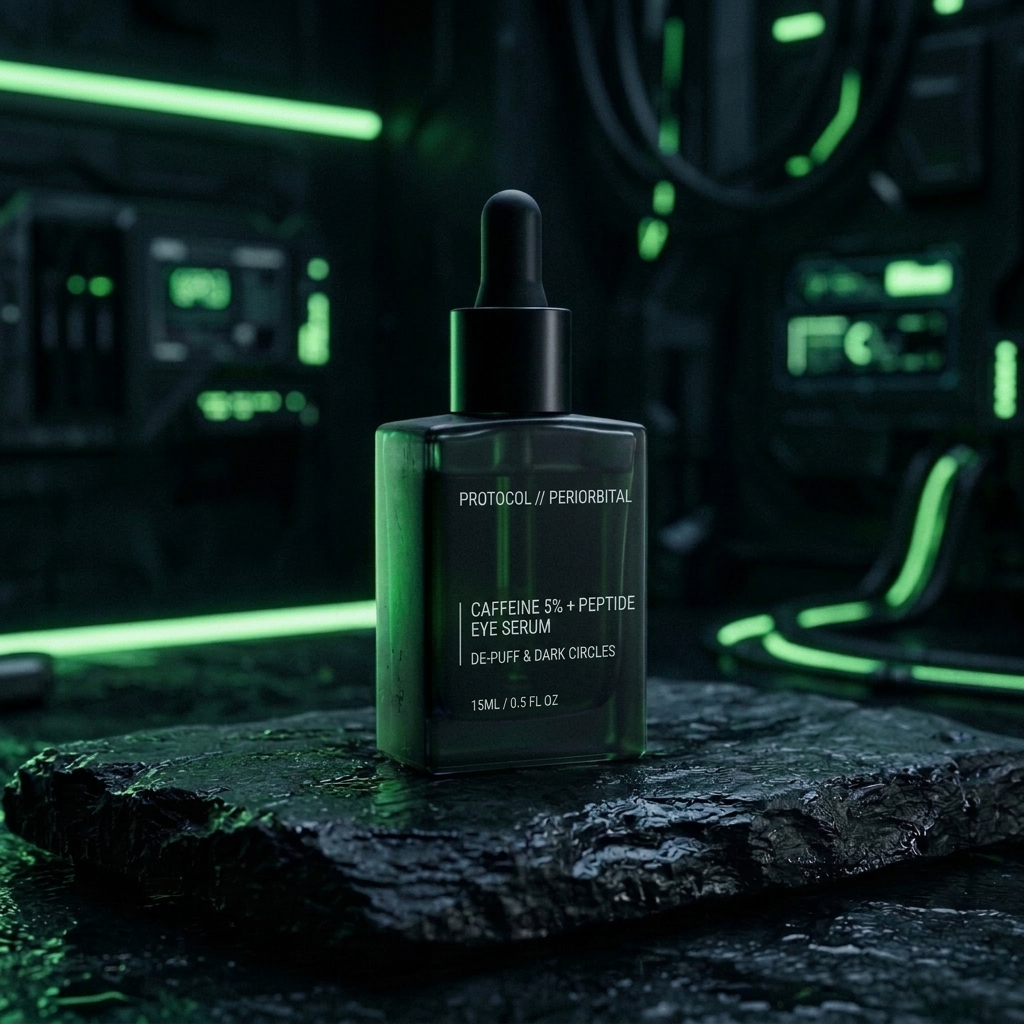
Dark circles and under-eye bags are not a single condition. In dermatology, infraorbital dark circles are classified into four distinct mechanisms — vascular pooling, excess melanin pigment, transient fluid edema, and structural tear-trough shadowing — plus mixed combinations of the four[1][2][3]. A product that works for morning fluid bags does nothing for brown pigment, and a brightening serum does nothing for a structural bone shadow. Matching the treatment to the mechanism is the entire game.
Why Is the Skin Under Your Eyes Different From the Rest of Your Face?
Eyelid and periorbital skin is the thinnest skin on the human body — roughly 0.5 mm thick compared with about 2 mm on the rest of the face — with minimal subcutaneous fat and very few sebaceous glands[1][2].
Directly beneath that translucent skin sits the orbicularis oculi muscle and a dense network of micro-capillaries. Because there is almost no fat padding between the skin and the vascular bed, anything that dilates those vessels, slows venous drainage, or thins the overlying dermis immediately shows through as a bluish, purple, or dark-red ring[2].
That anatomy is also why most "men's eye creams" fail. Putting a basic glycerin moisturizer into a 15 mL black tube and charging three times per ounce what the brand charges for its face lotion does not change vascular congestion, melanin deposition, or orbital bone geometry.
Not sure what your skin actually needs?
Skip the guesswork. Upload one selfie and let our AI Vision engine detect your top 3 skin issues, calculate your biological skin age, and build a 2-minute AM/PM protocol with exact ingredient percentages.
How Do You Diagnose Your Type of Dark Circles in 30 Seconds?
Stand in front of a mirror with a direct, front-facing light source (not overhead bathroom lighting). Perform two quick checks used in clinical classification[2][3]: gently stretch the lower-eyelid skin slightly downward for two seconds, and then tilt your chin up so light hits the under-eye hollow directly.
| Type | What Happens in the Mirror | What Actually Works |
|---|---|---|
| 1. Vascular (Blue / Purple) | Looks bluish, purple, or pinkish; the color becomes MORE prominent when you gently stretch the thin skin[2]. Worse after poor sleep or nasal congestion. | Topical caffeine, cold vasoconstriction, treating nasal allergies, and thickening the dermis with gentle retinoids. |
| 2. Pigmented (Brown) | Brown or tan band under or around the eyes; the color moves WITH the skin when stretched without changing intensity[3]. | Niacinamide, vitamin C, daily SPF 30+, and stopping eye rubbing. |
| 3. Fluid Edema (Morning Bags) | Puffy swelling that is worst on waking and partially flattens by mid-afternoon. Worse after high-sodium meals or alcohol. | Cold compression + topical caffeine in the morning, head elevation during sleep, cutting late-night sodium and alcohol. |
| 4. Structural / Shadowing | When you tilt your face directly into front-facing light, the dark trench disappears — because it was a shadow cast by your brow ridge or tear-trough hollow[2]. | Hydration + gentle retinoids improve skin thickness slightly, but deep structural hollows or permanent fat prolapse are anatomical, not topical. |
Many men have a mixed type — most commonly vascular pooling combined with a structural tear-trough shadow, or vascular plus morning fluid edema[3]. Treating the vascular and fluid components still takes a noticeable edge off how tired your eyes look, even when bone structure stays the same.
Which Ingredients Actually Work for Dark Circles and Eye Bags?
1. Topical Caffeine — For Morning Puffiness and Vascular Tint
Caffeine is a vasoconstrictor with good skin penetration. Applied topically, it constricts dilated micro-vessels in the periorbital dermis and helps reduce local fluid accumulation (edema)[4]. Controlled clinical studies show topical caffeine formulations measurably reduce periorbital puffiness and vascular dark circles when used consistently[5]. It works on vascular and fluid types, not on brown melanin or bone shadows.
2. Niacinamide and Vitamin C — For Brown Periorbital Pigment
If your circles are brown, you need melanin-pathway inhibitors, not vasoconstrictors. Niacinamide (vitamin B3) reduces hyperpigmentation by inhibiting the transfer of melanosomes from melanocytes to surrounding keratinocytes[6], while strengthening the thin under-eye barrier. Vitamin C inhibits tyrosinase (the enzyme required for melanin production) and supports dermal collagen[2].
3. Low-Strength Retinoids — For Thin, Translucent Under-Eye Skin
Thickening the epidermis and dermis makes underlying purple veins less visible. Topical retinol induces epidermal thickening (hyperplasia) and stimulates collagen synthesis in human skin[7]. Over 12+ weeks, a low-concentration, eye-formulated retinoid (such as 0.02% encapsulated retinal or a dedicated gentle eye retinol) increases tissue opacity so the vascular bed underneath shows through less starkly[2]. Do not drag a strong full-face retinol or tretinoin right up to your lash line — irritation and dermatitis on 0.5 mm skin will make your eyes look redder and darker.
Why Nasal Congestion Causes "Allergic Shiners" in Men
If you wake up with a stuffy nose and purple rings under your eyes, the problem starts in your nasal passages, not your skin.
The small veins that drain blood from under your eyelids empty into the veins of the nasal cavity. When chronic rhinitis, dust allergies, or sinus congestion swell the nasal lining, venous return from the periorbital veins slows down. Dark, deoxygenated blood pools under the lower eyelids, dilating the superficial veins and creating the bruised purple look clinicians call "allergic shiners"[1].
Allergies also make your eyes itch, which leads to habitual rubbing. Rubbing fragile 0.5 mm skin ruptures tiny capillaries (depositing hemosiderin pigment) and triggers chronic post-inflammatory hyperpigmentation[1][2]. Treating nightly nasal congestion with a saline rinse or an OTC allergy spray — and keeping your hands off your eyes — often clears more under-eye darkness than any serum on the market.
The Under-Eye Protocol (AM & PM)
Morning: Constrict and Protect (60 Seconds)
- Cold splash or chilled compress (30 seconds): Rapidly constricts dilated superficial capillaries and reduces overnight fluid edema.
- Caffeine 5% serum (1 rice-grain drop total): Split a single tiny drop between both ring fingers and tap gently along the orbital bone. Never rub or drag the skin.
- Broad-spectrum SPF 30+: UV radiation degrades dermal collagen and darkens periorbital pigment[1]. If chemical sunscreens sting your eyes, use a mineral zinc-oxide stick or fluid around the orbital area.
Night: Repair and Thicken (60 Seconds)
- Niacinamide + ceramide eye cream (nightly): Supports barrier thickness and reduces pigment transfer without clogging pores.
- Low-dose eye retinoid (2–3 nights per week): Apply a rice-grain amount along the orbital bone on dry skin to gradually thicken the dermis over 3–6 months.
- Sleep mechanics: Cut high-sodium food and alcohol in the last 3 hours before bed, and sleep with your head slightly elevated so interstitial fluid drains downward instead of pooling in the lower eyelids.
What to Buy
For morning puffiness & vascular circles: The Ordinary Caffeine Solution 5% + EGCG — $9
Concentrated 5% caffeine paired with purified green tea epigallocatechin gallatyl glucoside (EGCG). Half a drop per eye in the morning is enough; one bottle lasts roughly five months.
For brown pigment & barrier support: CeraVe Eye Repair Cream — $16
Formulated with niacinamide, ceramides, and hyaluronic acid. Fragrance-free, lightweight enough to avoid triggering milia, and ophthalmologist-tested.
For thickening thin under-eye skin: Beauty of Joseon Revive Eye Serum (Ginseng + Retinal) — $17
Uses 0.02% liposome-stabilized retinaldehyde — a gentle, eye-appropriate concentration that stimulates collagen and epidermal thickness without the irritation of full-strength facial retinoids.
If a "men's eye roller" does not list the percentage of caffeine, niacinamide, or retinoid on the box, you are paying $40 for cold metal and basic lotion. Keep a $9 caffeine serum in the fridge and you get both the cold constriction and an actual clinical active.
Common Mistakes
- Rubbing your eyes at your desk or when tired. Mechanical friction breaks fragile capillaries and drives post-inflammatory brown pigment into the thin eyelid skin[1].
- Applying heavy face creams or oils right up to the lash line. Rich occlusives migrate into the eyes overnight, causing morning fluid swelling and small white keratin cysts (milia).
- Putting strong facial retinol or exfoliating acids under the eyes. A 1% retinol or 2% salicylic acid serum belongs on thicker facial skin, not on 0.5 mm eyelid tissue.
- Using too much product. Everything applied along the orbital bone warms up and travels slightly upward on its own. A rice-grain dot split between both eyes is plenty.
- Expecting a cream to erase deep bone structure. When the mirror light test shows a pure structural shadow, topicals can improve skin quality by a modest margin, while sleep, hydration, and overall skin clarity carry the rest.
FAQ
Do men actually need a separate eye cream, or does regular moisturizer work?
If you just need basic hydration and your regular moisturizer is gentle and fragrance-free, it works fine under the eyes. You only need a dedicated eye product when you want a targeted active at a specific concentration — such as a 5% caffeine serum for morning puffiness and vascular pooling, or a low-strength encapsulated retinoid formulated for thin eyelid skin.
Why do I still have dark circles even when I sleep 8 hours a night?
Sleep deprivation is only one trigger. Persistent dark circles in well-rested men are usually caused by translucent eyelid skin showing the underlying purple venous network, chronic nasal or allergy congestion ("allergic shiners"), dermal hyperpigmentation, or deep-set orbital bone structure casting a shadow.
Does putting cold spoons or ice under your eyes actually work?
Yes, temporarily for morning puffiness and vascular tint. Cold triggers vasoconstriction, shrinking dilated blood vessels and reducing fluid swelling within 5 to 10 minutes. Always wrap ice or a chilled tool in a thin cloth — pressing raw ice directly onto eyelid skin can damage fragile capillaries.
Can nasal congestion or allergies cause dark circles in men?
Yes. Chronic nasal congestion impedes venous drainage from the small periorbital veins that empty into the nasal veins, causing dark deoxygenated blood to pool under the lower eyelids. Dermatologists call these "allergic shiners." Treating nightly nasal congestion often improves purple under-eye circles more than topical creams.
What are the tiny white bumps under my eyes that won't pop?
Those are milia — small subepidermal keratin cysts, not acne pimples. Squeezing them damages the thin skin without clearing the cyst. They are frequently triggered by heavy, occlusive face creams applied too close to the lash line. Switching to lightweight gel-serums and a gentle eye-safe retinoid helps them shed over time.
References
- [1] Freitag FM, Cestari TF. What causes dark circles under the eyes? Journal of Cosmetic Dermatology, 2007. PMID: 17760697
- [2] Roh MR, Chung KY. Infraorbital dark circles: definition, causes, and treatment options. Dermatologic Surgery, 2009. PMID: 19469797
- [3] Huang YL, Chang SL, Ma L, et al. Clinical analysis and classification of dark eye circle. International Journal of Dermatology, 2014. PMID: 23879616
- [4] Herman A, Herman AP. Caffeine's mechanisms of action and its cosmetic use. Skin Pharmacology and Physiology, 2013. PMID: 23075568
- [5] Ahmadraji F, Shatalebi MA. Evaluation of the clinical efficacy and safety of an eye counter pad containing caffeine and vitamin K in emulsified Emu oil base. Advanced Biomedical Research, 2015. PMID: 25625116
- [6] Hakozaki T, Minwalla L, Zhuang J, et al. The effect of niacinamide on reducing cutaneous pigmentation and suppression of melanosome transfer. British Journal of Dermatology, 2002. PMID: 12100180
- [7] Kang S, Duell EA, Fisher GJ, et al. Application of retinol to human skin in vivo induces epidermal hyperplasia and cellular retinoid-binding proteins characteristic of retinoic acid. Journal of Investigative Dermatology, 1995. PMID: 7594742
The Bottom Line
Dark circles and eye bags only look complicated when you treat all four types like the same problem. Run the 30-second mirror test first: use 5% caffeine and cold compression in the morning for vascular pooling and puffiness, niacinamide and daily SPF for brown pigment, and a low-strength eye retinoid two or three nights a week to gradually thicken thin eyelid skin.
Fix nightly nasal congestion, cut late-night sodium, stop rubbing your eyes, and skip the $45 gimmicks.
Roast My Skin — AI skincare analysis built for men. No 10-step routines. No BS.